

- VoltFlow Solutions
- No Comments
- November 11, 2026
Gas Safety Certificates London | Landlord Guide
Gas Safety Certificates in London: A Complete Guide for Landlords and Property Owners
Gas safety is an essential responsibility for landlords, property owners and property management companies.
Whether you manage a single rental property or a portfolio of residential properties across London, ensuring that gas appliances, pipework and flues remain safe is vital for protecting occupants and maintaining the property.
In England, landlords have specific legal responsibilities under the Gas Safety (Installation and Use) Regulations 1998. These include arranging annual gas safety checks, maintaining relevant gas appliances and providing tenants with the required safety records.
A Gas Safety Certificate, commonly known as a CP12, provides a record of the inspection carried out by a Gas Safe registered engineer.
In this guide, VoltFlow Solutions Ltd explains the main gas safety requirements, what landlords should know about annual inspections and how to approach gas safety management for rental properties in London.
1-What Is a Gas Safety Certificate (CP12)?
A Gas Safety Certificate, commonly referred to as a CP12 or Landlord Gas Safety Record, is a document recording the results of a gas safety inspection.
It is issued following the relevant checks by a suitably qualified Gas Safe registered engineer.
The inspection covers relevant gas appliances, fittings and flues within the scope of the landlord’s responsibilities.
Depending on the property, this may include:
- Gas boilers.
- Gas cookers provided by the landlord.
- Gas fires and heaters.
- Associated gas pipework and fittings.
- Flues and ventilation arrangements.
- Relevant gas safety controls.
The report records the appliances inspected, the results of the checks and any safety-related defects identified.
Landlords should retain the completed record and arrange any necessary follow-up work.
2-Are Gas Safety Certificates a Legal Requirement for Landlords in London?
Yes. Under the Gas Safety (Installation and Use) Regulations 1998, landlords in England must ensure that gas appliances and flues they own and provide for tenants are maintained in a safe condition.
They must also arrange a gas safety check at least once every 12 months.
The inspection must be carried out by a Gas Safe registered engineer who is qualified and competent for the relevant type of gas work.
Landlords must also:
- Arrange annual gas safety checks.
- Maintain relevant gas appliances, fittings and flues.
- Keep a record of completed safety checks for at least two years.
- Provide existing tenants with a copy of the latest record within 28 days of the check.
- Provide new tenants with the latest gas safety record before they move into the property.
These responsibilities apply to relevant landlord-provided gas appliances and flues, including applicable appliances in communal areas.
Property owners should also understand that arranging an annual gas safety check does not replace the need for appropriate ongoing appliance maintenance.
3-How Often Does a Gas Safety Check Need to Be Carried Out?
A gas safety check must generally be completed every 12 months for relevant landlord-provided gas appliances and flues.
There is also some flexibility in scheduling annual inspections.
Under the Gas Safety (Installation and Use) (Amendment) Regulations 2018, landlords can arrange the next annual check up to two months before the existing deadline without losing the original anniversary date.
This can help landlords and property managers organise inspections in advance and reduce the risk of missed deadlines.
For example, if a property’s annual gas safety check is due in October, the next inspection may be arranged during the preceding two months while retaining the original inspection schedule.
Maintaining an accurate record of inspection dates is particularly useful when managing multiple rental properties.
4-What Does a Gas Safety Inspection Include?
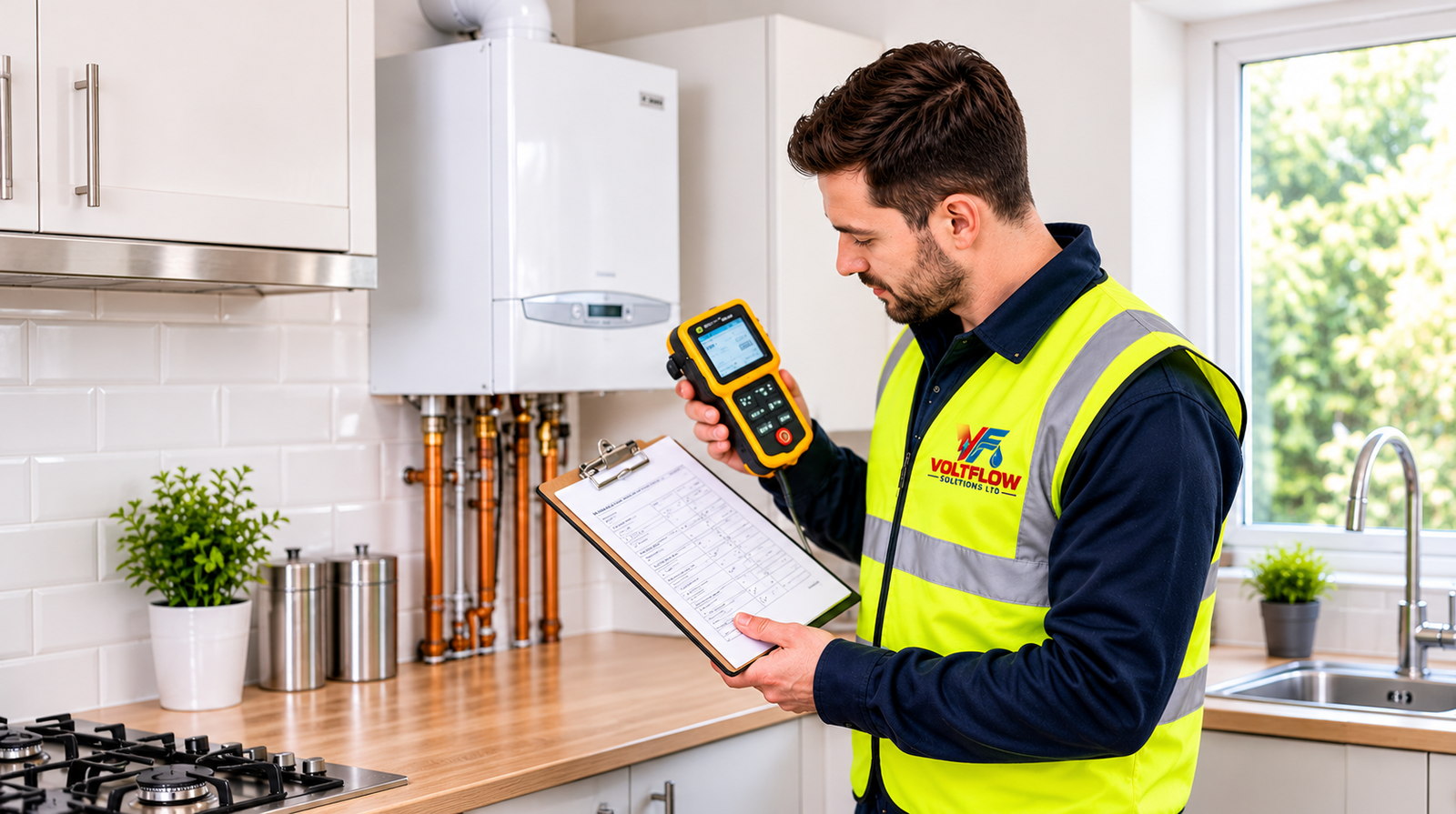
A gas safety inspection involves checking relevant gas appliances, fittings and flues to assess whether they are operating safely.
The exact inspection requirements depend on the appliance and installation.
A typical inspection may involve:
Gas appliances: Checking the condition and safe operation of relevant gas appliances.
Flues: Assessing whether combustion products can be safely discharged.
Ventilation: Checking that suitable ventilation arrangements are provided where required.
Gas pipework: Assessing relevant accessible gas pipework and connections.
Safety devices: Checking applicable safety controls and protective devices.
Combustion performance: Carrying out appropriate tests in accordance with the appliance and applicable standards.
The engineer records the results and identifies any safety-related defects requiring attention.
5-Understanding Gas Safety Inspection Results
Following the inspection, the Gas Safe registered engineer records the findings and explains whether any defects or safety concerns have been identified.
Depending on the circumstances, the engineer may recommend repairs, further investigation or other appropriate action.
If an appliance is considered unsafe, it may need to be isolated or disconnected until the necessary work has been completed.
Landlords should never ignore safety warnings or allow tenants to continue using an appliance that has been identified as unsafe.
Any remedial work must be undertaken by an appropriately qualified Gas Safe registered engineer.
6-Boiler Servicing and Gas Safety Checks: What Is the Difference?
One common misunderstanding among landlords is assuming that a boiler service automatically satisfies the annual gas safety check requirement.
Although the two activities may involve overlapping checks, they are not necessarily the same.
Annual Gas Safety Check
The purpose is to assess the safety of relevant gas appliances and flues and produce the required gas safety record.
Boiler Servicing
A boiler service focuses on the appliance’s condition, operation, maintenance and performance in accordance with the manufacturer’s instructions and relevant requirements.
A service may identify maintenance needs or developing faults that should be addressed.
Landlords should ensure that the required annual gas safety checks are completed and that ongoing maintenance is arranged separately where necessary.
7-Gas Safety for Landlords and Property Management Companies
Managing gas safety across multiple properties requires an organised approach.
Landlords, letting agents and property management companies should maintain accurate records and ensure that inspections are arranged before their deadlines.
A practical gas safety management system should include:
Inspection schedules: Maintain a record of annual gas safety inspection dates for each property.
Certificate management: Keep copies of completed Gas Safety Records.
Remedial work: Arrange repairs and follow-up inspections when defects are identified.
Tenant communication: Provide the required documentation within the applicable timescales.
Property handovers: Check the latest gas safety records when preparing properties for new tenants.
Where a managing or letting agent is responsible for arranging inspections, the agreement should clearly identify who is responsible for the relevant duties and record keeping.
However, landlords should ensure that their legal responsibilities are properly addressed and not simply assume that appointing an agent removes them.
8-Gas Safety Considerations for Flats and HMOs
Different property types can involve additional practical considerations.
Flats and Apartments
Flat owners and landlords should understand which gas appliances, pipework and flues fall within their responsibilities.
Where communal gas installations or shared services are involved, responsibilities should be clearly established.
Houses in Multiple Occupation (HMOs)
HMO properties require particular attention to gas safety because of their occupancy arrangements and shared facilities.
Landlords should ensure that relevant landlord-provided appliances and flues are included in the required inspections.
Gas safety should also be considered alongside other applicable property safety and licensing requirements.
Rental Property Portfolios
For landlords managing several properties, maintaining a central register of gas safety inspection dates and records can simplify administration.
This can help identify upcoming inspections and outstanding remedial work.
9-Choosing a Gas Safe Registered Engineer in London
Gas work must only be undertaken by appropriately qualified Gas Safe registered engineers.
Before arranging gas installation, inspection or repair work, property owners should verify the engineer’s registration and confirm that they are qualified for the specific type of work required.
Important considerations include:
- Current Gas Safe registration.
- Relevant qualifications for the appliance or installation.
- Experience with residential gas systems.
- Appropriate insurance arrangements.
- Clear inspection records and documentation.
- Professional advice regarding any identified defects.
Landlords should never rely solely on a general maintenance contractor for work that requires Gas Safe registration.
10-Heating and Gas Services from VoltFlow Solutions Ltd
VoltFlow Solutions Ltd provides building, renovation, property maintenance and building services solutions across West London and Greater London.
Its service offering includes Heating & Gas Services as part of its wider property improvement and maintenance activities.
Heating and gas-related requirements may form part of larger renovation projects, property upgrades and maintenance programmes.
For landlords, homeowners and property managers, coordinating heating requirements with wider building and property maintenance work can help support the ongoing condition and functionality of a property.
Gas installation, servicing, safety inspections and certification must be carried out by appropriately qualified and Gas Safe registered professionals.
Where specialist gas work is required, the relevant qualifications and registration should be verified before any work is undertaken.
11-Common Gas Safety Mistakes Landlords Should Avoid
Some common mistakes can create unnecessary risks and compliance problems.
Landlords should avoid:
- Allowing annual gas safety checks to expire.
- Assuming a boiler service automatically replaces a gas safety check.
- Failing to provide tenants with the required gas safety record.
- Ignoring defects identified during an inspection.
- Using unregistered individuals for gas work.
- Failing to maintain accurate inspection records.
- Leaving remedial work unresolved.
- Assuming that a managing agent automatically removes the landlord’s legal responsibilities.
A consistent approach to gas safety helps landlords protect tenants and manage their properties responsibly.
Frequently Asked Questions
How much does a Gas Safety Certificate cost in London?
The cost varies depending on the property, number of gas appliances, access arrangements and the scope of the inspection. Landlords should request a quotation based on the actual property requirements.
Is a CP12 certificate required every year?
Yes. Relevant landlord-provided gas appliances and flues must generally undergo a gas safety check every 12 months.
Who can issue a Gas Safety Certificate in London?
The inspection and associated record must be completed by an appropriately qualified Gas Safe registered engineer.
Does a boiler service count as a Gas Safety Certificate?
Not automatically. An annual gas safety check and a boiler service have different purposes. Landlords should ensure that the required safety check is completed and documented.
How long should landlords keep Gas Safety Records?
Landlords must retain gas safety check records for at least two years.
When must tenants receive a copy of the Gas Safety Certificate?
Existing tenants must receive a copy within 28 days of the check. New tenants must receive the latest record before moving into the property.
Can a landlord arrange a gas safety check early?
Yes. The inspection can be completed up to two months before its due date without changing the original anniversary date, subject to the applicable requirements.
What should I do if a gas appliance is found to be unsafe?
Follow the Gas Safe engineer’s instructions immediately. An unsafe appliance should not be used until it has been made safe by an appropriately qualified professional.
Final Thoughts: Protecting Rental Properties Through Gas Safety
Gas safety is an important part of responsible property ownership and management.
Annual inspections, appropriate maintenance, accurate documentation and timely remedial work all help protect tenants and maintain safe residential properties.
For landlords and property management companies across London, understanding the relevant gas safety requirements is essential.
VoltFlow Solutions Ltd supports building, renovation and property improvement requirements across West London and Greater London.
Need Heating or Property Maintenance Support?
Contact VoltFlow Solutions Ltd to discuss your property requirements and explore the available building, heating and maintenance services.
VoltFlow Solutions Ltd
Building. Maintaining. Improving.
Next steps: gas safety certificate with VoltFlow
If you need help with gas safety certificate, explore our heating and gas services page, browse our recent projects or request a quote. For independent guidance, see Gas Safe Register.
